
· by Michael Blair, Nashville's Closets
Rotating a wardrobe by the season frees up a lot of closet space. It also sends a box of good clothes somewhere in the house, and in a Middle Tennessee summer the places people usually pick are the hot, damp ones. Where the boxes go matters more than what they are made of, so that is where we start.
Where should off-season clothes not be stored?
Museum conservators have worked out what textiles need, and an attic, a garage or an unconditioned basement misses it. The National Park Service’s guidance on mold and mildew on textiles recommends storing them at 64 to 68°F, with 75°F as the upper limit, and keeping relative humidity below 65 percent, ideally at 50 to 55. Every attic we have been up in on a July afternoon was far past that ceiling. A garage sits outside the air conditioning as well, so nothing keeps its humidity down. Basements and crawl spaces are the damp ones: the EPA’s mold course names crawl spaces with high relative humidity as common sites of hidden mold growth, particularly over a bare earth floor, and the EPA’s brief guide to mold and moisture in the home illustrates the point with a suitcase growing mold in a humid basement.
The swings do as much harm as the highs. The same NPS guidance asks for steady conditions, because fluctuations can let dormant spores begin to grow, and because fibers dry out and then absorb moisture, swelling and cracking with each swing in humidity. The EPA course explains that condensation may form wherever warm, humid air touches something cold, and that mold can grow on virtually any organic material as long as moisture and oxygen are present. We would expect the same thing inside a closed bin as the space around it heats by day and cools at night. That is why we would pick an ordinary closet inside the cooled part of the house over any of the three; NPS calls cool, dry conditions, adequate ventilation and good housekeeping critical to keeping textiles over the long term.
Clean before storing, always
Clothes moth and carpet beetle larvae eat animal fibers. UC IPM’s pest note on clothes moths lists wool clothing, furs, carpets and rugs among their food, and it warns that cloth stained with food, sweat or urine takes more damage. The University of Kentucky’s carpet beetle fact sheet explains that wool, fur, silk and leather contain keratin, a protein the larvae can digest, and that cotton and synthetics are rarely attacked unless blended with wool or heavily soiled with food stains or body oils. A wool sweater folded away with spills and a winter of wear in it is exactly what they are after. If you have already found holes, our post on cedar closets and clothes moths goes into telling the two pests apart.
Everything going away for a season goes away clean. The Kentucky fact sheet says woolens should be dry-cleaned or laundered before long storage, since cleaning kills any eggs or larvae and removes the perspiration odors that draw pests in, and it puts no faith in cedar: closets and chests made of it are seldom effective, because the seal is not tight enough to hold the oil at a strength that repels or kills. We take dry cleaning out of the thin plastic it comes home in and give anything that hangs a cloth cover. The National Park Service’s conservators do something similar: their guide to padded hangers protects each hanging garment with a dust cover, uses washed, unbleached cotton muslin or Tyvek for the outer slipcover, and keeps knits off hangers entirely, storing them flat in boxes or drawers. Mothballs stay out of living space. The National Pesticide Information Center’s naphthalene fact sheet says that when you smell mothballs you are inhaling the pesticide, and that clothing stored in mothballs and not washed afterwards has caused anemia in infants who wore it.
- Wash or dry clean everything before it goes away
- Take dry cleaning out of its plastic bag
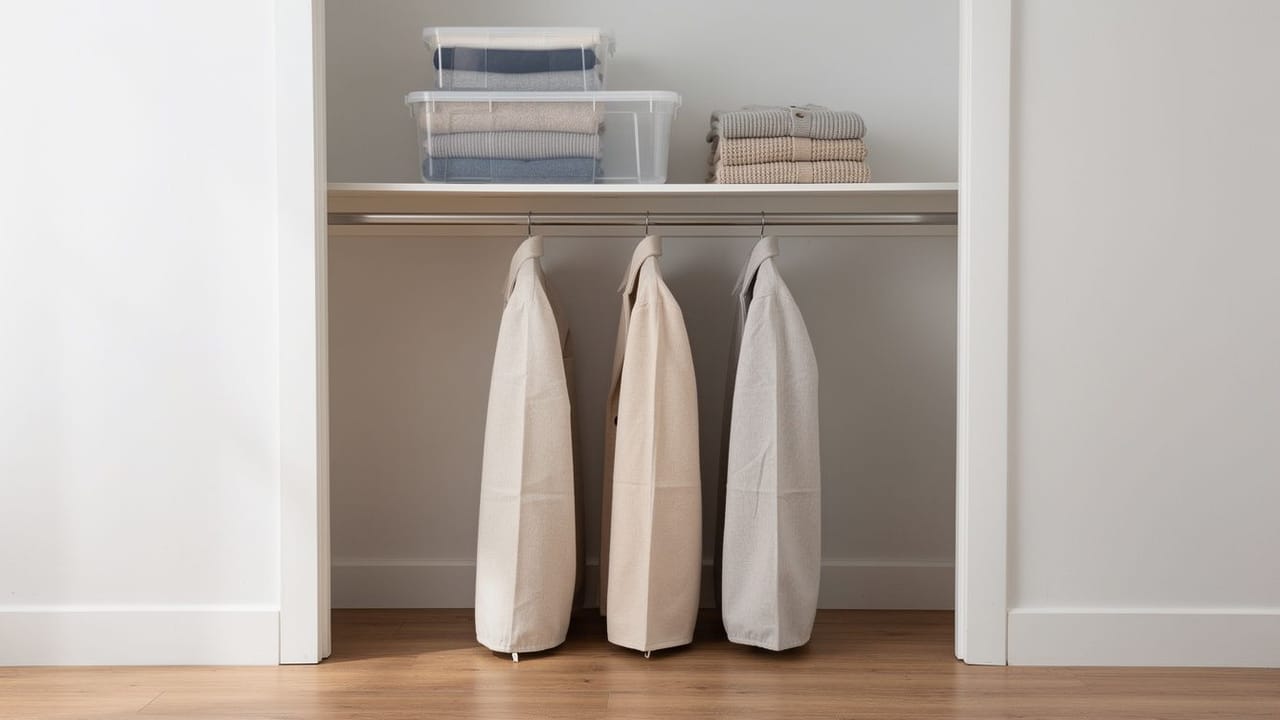
- A cotton cover for anything hanging, and knits folded flat
- Tight-lidded bins for clean, completely dry clothes
- No mothballs in living space, and no counting on cedar
Are vacuum bags safe for storing clothes?
Vacuum compression bags save a great deal of room, and we keep them for synthetics, spare bedding and anything else that can take being flattened. We would not leave down or good wool squeezed flat in one for months. We have not seen a published test of what long compression does to either, so take that as our own caution. A compressed bag also gives any moisture packed in with the clothes nowhere to go, which is one more reason nothing goes in until it is completely dry.
A plastic bin with a tight lid is the general-purpose answer. UC IPM’s advice for anything moths eat is to make sure it is clean and pest free and then place it in an airtight container, and the Kentucky fact sheet says the same with tight-fitting plastic bags or containers. The seal that keeps insects out keeps moisture in, so the clothes have to be dry when the lid goes on. Cardboard boxes are a poor stand-in: UC IPM’s note on silverfish and firebrats says silverfish feed on paper with glue or paste and on starch in clothing, and that they live and develop in damp, warm places. Cotton bags and old pillowcases keep dust off loose things, though they are not airtight, so wool that needs protecting from moths belongs in a bin.
Where is the best place to store seasonal clothes?
The top shelf of an interior closet, under a bed, or a spare room the air conditioning reaches. Any of these sits far closer to the cool, dry conditions conservators ask for than an attic does, and the space it costs is smaller than most people expect once bulky things are sorted and folded instead of simply moved. Keep the closet itself dry. The EPA guide puts the target for a home under 60 percent relative humidity, with 30 to 50 the ideal range, and a meter to check it is a small, inexpensive thing to buy. If the closets you have are already full, a reach-in fitted with double hang and drawers can make room for the off-season stack, and our post on getting twice the storage from the same closet shows how we find it.
If storage genuinely has to go into an unconditioned space, we put it up on a shelf off the floor, keep it away from exterior walls and add desiccant. The NPS textile guidance warns that desiccant bags absorb moisture until they are fully humidified and lose all effectiveness, so they need checking and replacing, and it suggests a dehumidifier and gentle air circulation in place of stagnant air. Treat all of that as damage limitation. It suits durable things far better than wool, leather or down. When you would rather make room indoors, ask us for a free estimate and we will look at what your closets could hold.
Sources
- National Park Service, Conserve O Gram 16/1: Causes, Detection, and Prevention of Mold and Mildew on Textiles — Textile storage at 64 to 68°F with a 75°F upper limit and relative humidity below 65 percent (50 to 55 if possible); fluctuations let spores grow and make fibers swell and crack; cool, dry conditions and ventilation; musty odor as the first sign; desiccant bags must be maintained; dehumidifiers and air circulation (museum-collection guidance)
- US EPA, Mold Course, Chapter 2 — Crawl spaces with high relative humidity are common sites of hidden mold; warm, humid air touching a cold surface can condense; mold grows on organic material with moisture and oxygen; dry wet materials within 24 to 48 hours
- US EPA, A Brief Guide to Mold, Moisture, and Your Home — Suitcase growing mold in a humid basement; target under 60 percent relative humidity indoors, 30 to 50 ideal; a humidity meter is cheap; dry items within 24 to 48 hours
- UC Statewide IPM Program, Pest Notes: Clothes Moths (UC ANR Publication 7435, updated 03/2013) — Larvae feed on wool clothing, furs, carpets and rugs; stained fabrics more subject to damage; store clean, pest-free items in an airtight container; mothball vapor reaches a killing level only in an airtight container
- University of Kentucky Entomology, ENTFACT-601: Carpet Beetles (Michael F. Potter) — Larvae digest keratin in wool, fur, silk and leather; cotton and synthetics rarely attacked unless blended with wool or heavily soiled; dry-clean or launder woolens before long storage; tight-fitting plastic bags or containers; cedar closets and chests seldom effective
- National Park Service, Conserve O Gram 4/5: Storage Techniques for Hanging Garments: Padded Hangers — Protect hanging garments with a dust cover; washed unbleached cotton muslin or Tyvek outer slipcover; knits are stored flat, not hung
- UC Statewide IPM Program, Pest Notes: Silverfish and Firebrats (UC ANR Publication 7475, updated 12/2009) — Silverfish feed on paper with glue or paste and on starch in clothing; they live and develop in damp, warm places
- National Pesticide Information Center, Naphthalene General Fact Sheet (reviewed December 2010) — Mothballs turn into a toxic gas that kills insects; smelling them means inhaling the pesticide; unwashed clothing stored in mothballs has caused anemia in infants
FAQ
Storing Off-Season Clothes in a Humid Climate — questions
Are mothballs safe to use in a closet?
We keep them out of living space. The National Pesticide Information Center describes mothballs as solids that turn into a toxic gas that kills insects, and says anyone who can smell them is breathing in the pesticide. UC IPM adds that outside a sealed container the fumes never get strong enough to kill the larvae. Cedar is no substitute, since the University of Kentucky calls cedar closets and chests seldom effective, and cleaning garments before storage does more than either.
Can I store clothes in the attic if they are in sealed bins?
We would not. Conservators recommend keeping textiles no warmer than 75°F, and a sealed bin does nothing about the heat of an attic in summer. The lid also holds in whatever moisture was in the clothes when it went on, and that moisture can condense on the inside of the bin as the attic heats and cools. A closet inside the air-conditioned house is the better place.
How do I stop stored clothes smelling musty?
Store them clean and fully dry, somewhere cool and dry. National Park Service conservators note that a musty odor is often the first sign of mold or mildew on a textile, and mold needs moisture to grow, so the fix is taking the moisture away; fragrance only hides it. The EPA advises drying anything wet within 24 to 48 hours to prevent mold, and we never pack anything that is even slightly damp.
How do you store seasonal clothes?
Clean and completely dry, every time: wash or dry clean each piece, take dry cleaning out of its plastic, fold knits flat and put wool in tight-lidded bins, with cloth covers on anything hanging. Then keep it all inside the air-conditioned house, on a high closet shelf or under a bed, away from the attic and garage.